The Independence Palace is an exceptional architectural work and a special national historical relic—a place that preserves the imprints of the victory day that concluded the historic Ho Chi Minh Campaign, liberating the South and reunifying the country.
Beyond its architectural beauty, the Independence Palace stands as a symbol of peace and unity, serving as one of the most attractive tourist destinations in Ho Chi Minh City, especially during the April 30th celebrations.
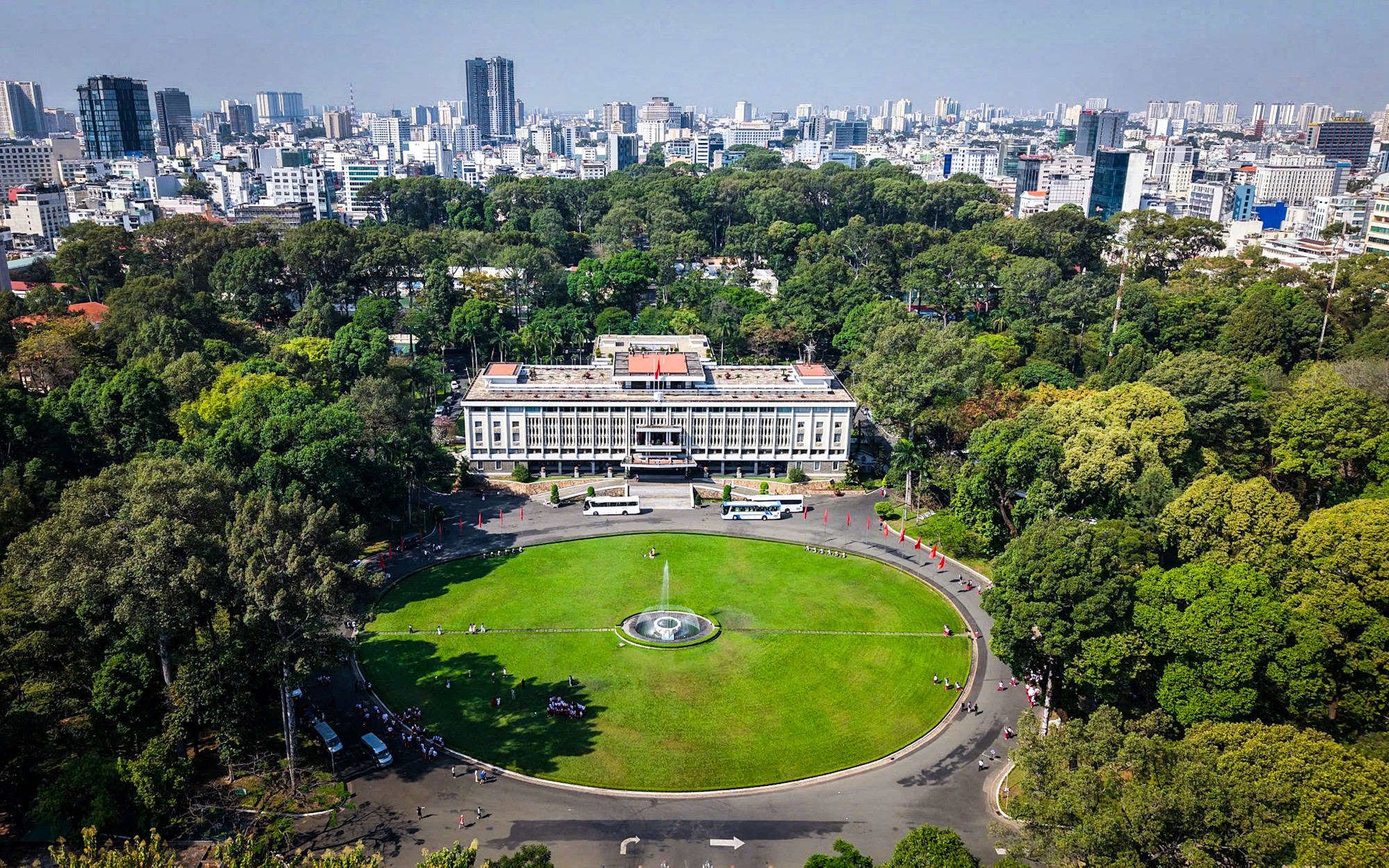 |
| Before the historic date of April 30, 1975, the Independence Palace served as one of the nerve centers of the Saigon administration, witnessing foreign military intervention that caused a devastating war in Vietnam. Above is an aerial view of the Independence Palace (Photo taken in April 2025). |
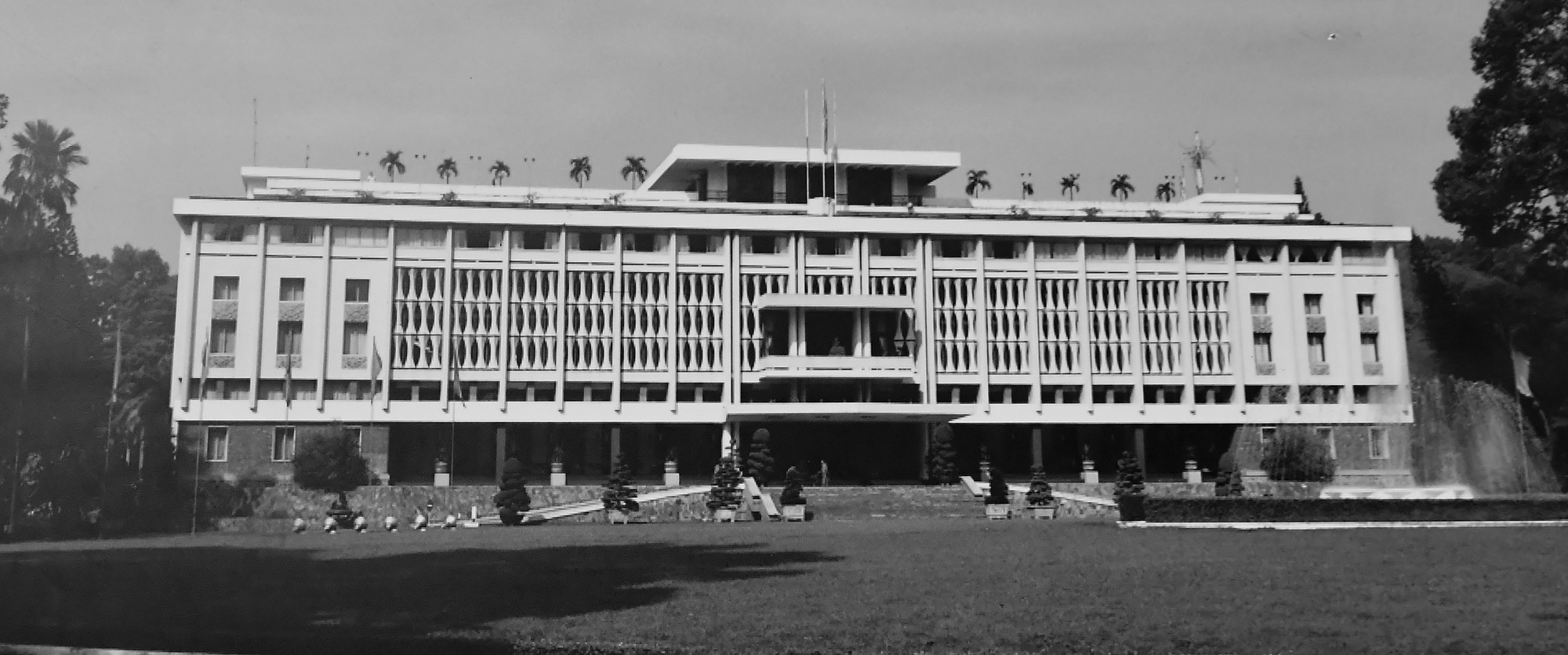 |
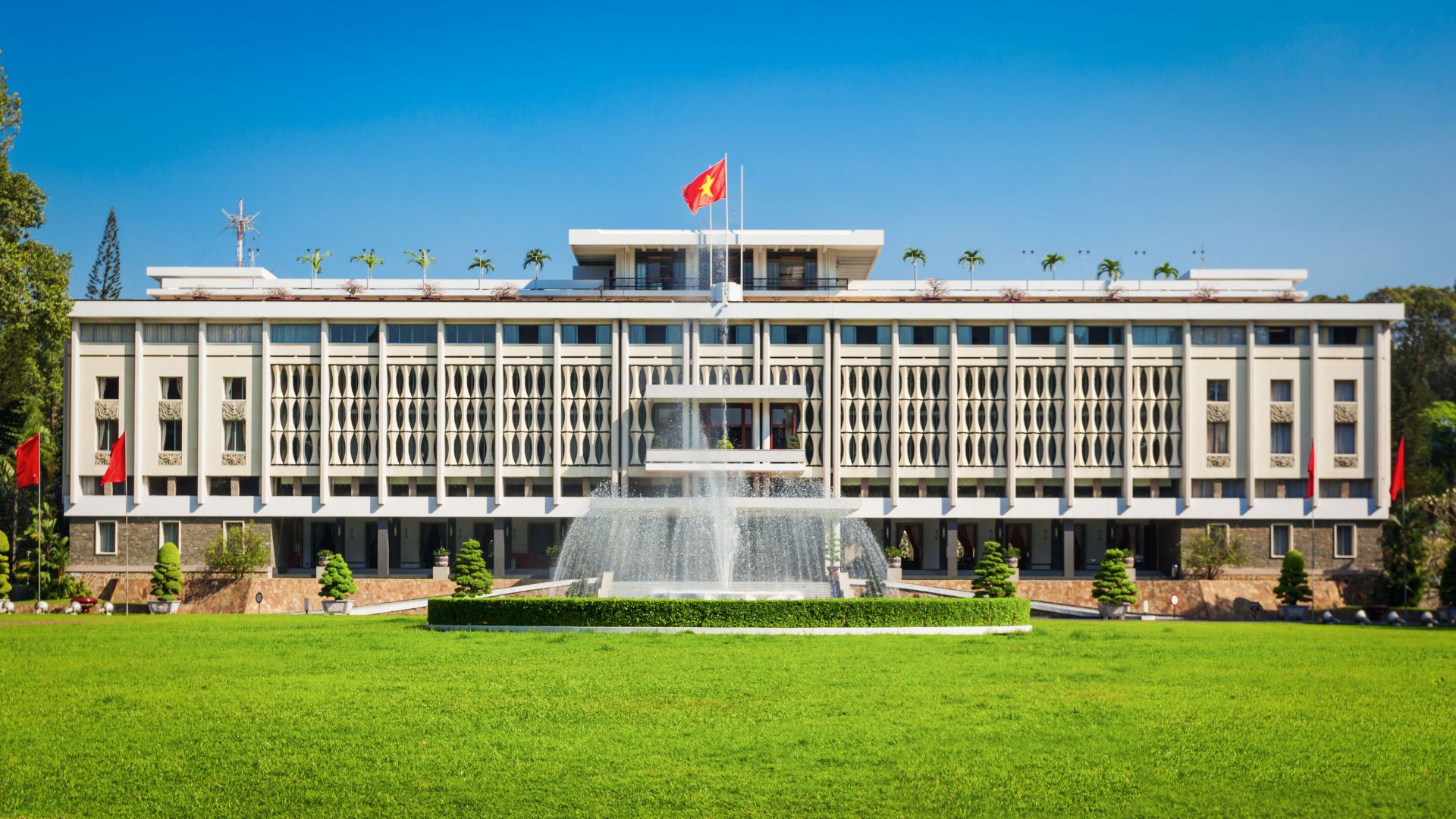
| An image of the Independence Palace before 1975 |
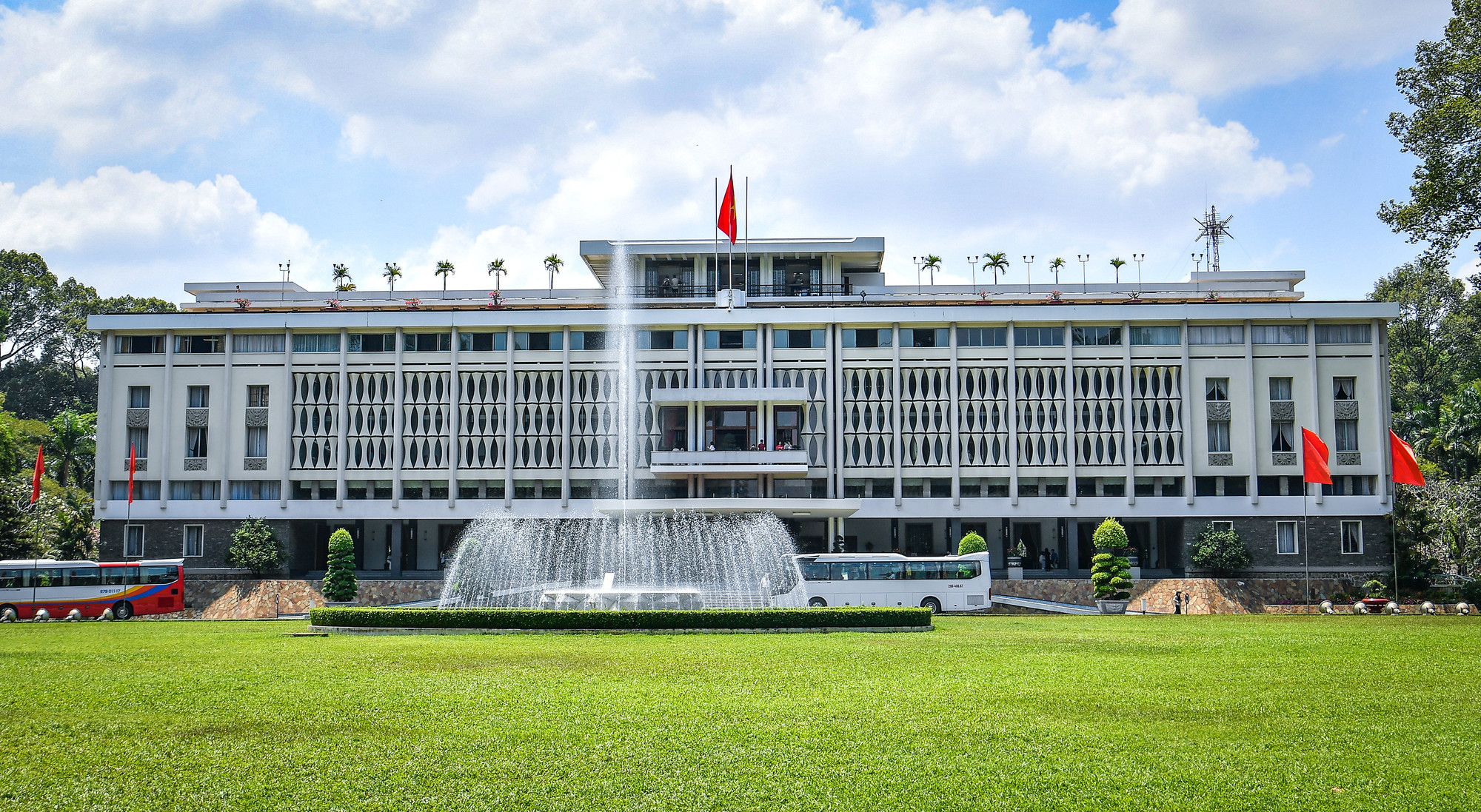 |
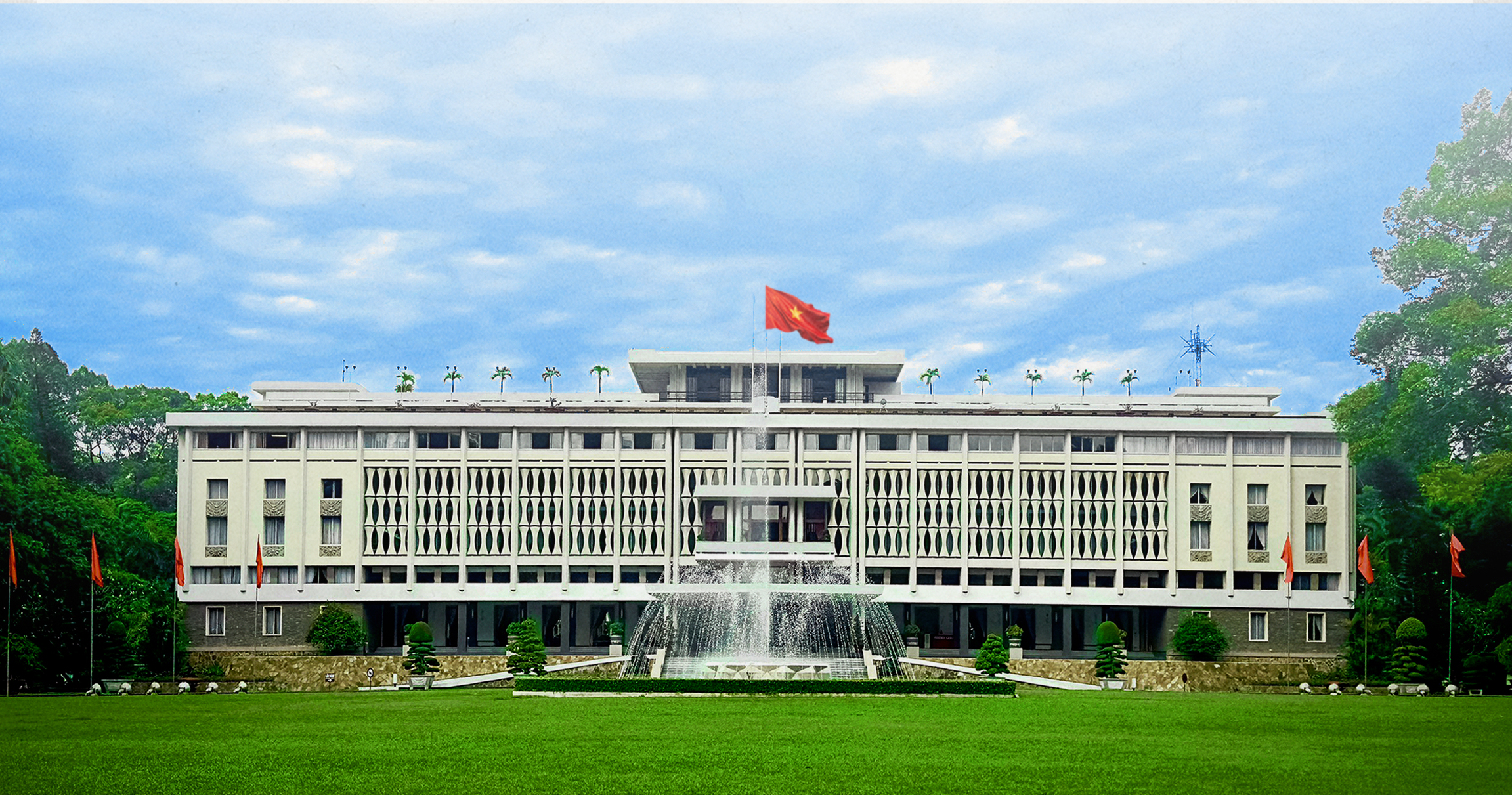
| The Independence Palace today – 50 years after the Great Victory (Photo taken in April 2025) |
 |
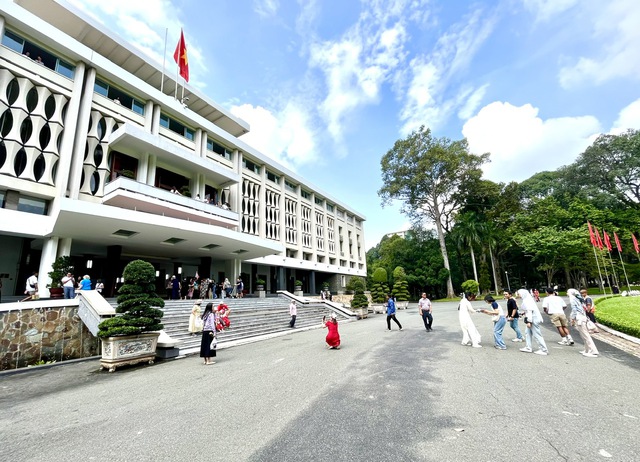
| On April 30, 1975, tank number 390 of the Liberation Army crashed through the gates of the Independence Palace. Today, these gates are a major point of interest for international tourists, who enjoy taking photos and checking in during their visit to the Independence Palace in Ho Chi Minh City. |
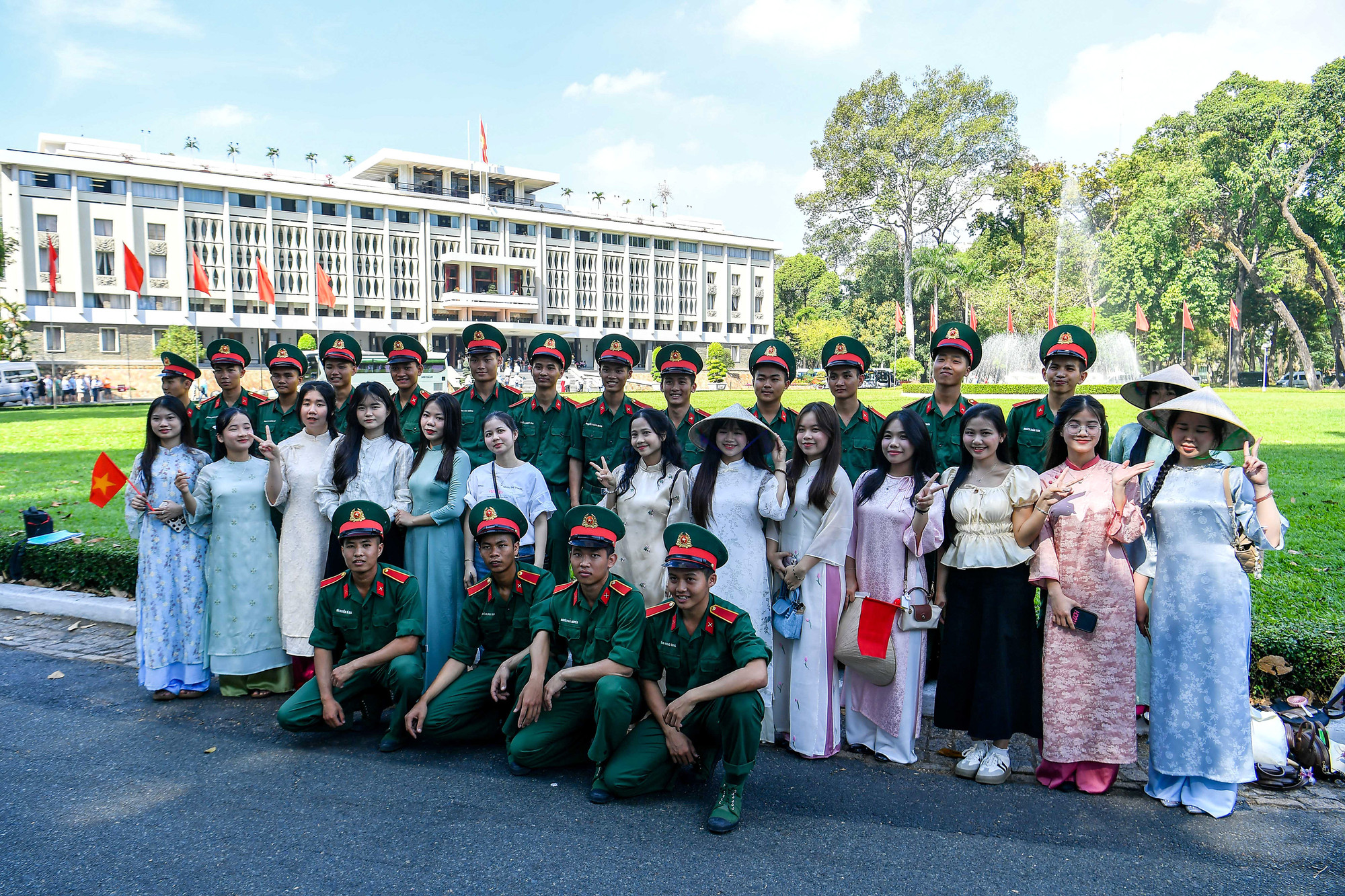 |
| During these historic days of April, people from across the country gather in large numbers to visit the Independence Palace national historical site. |
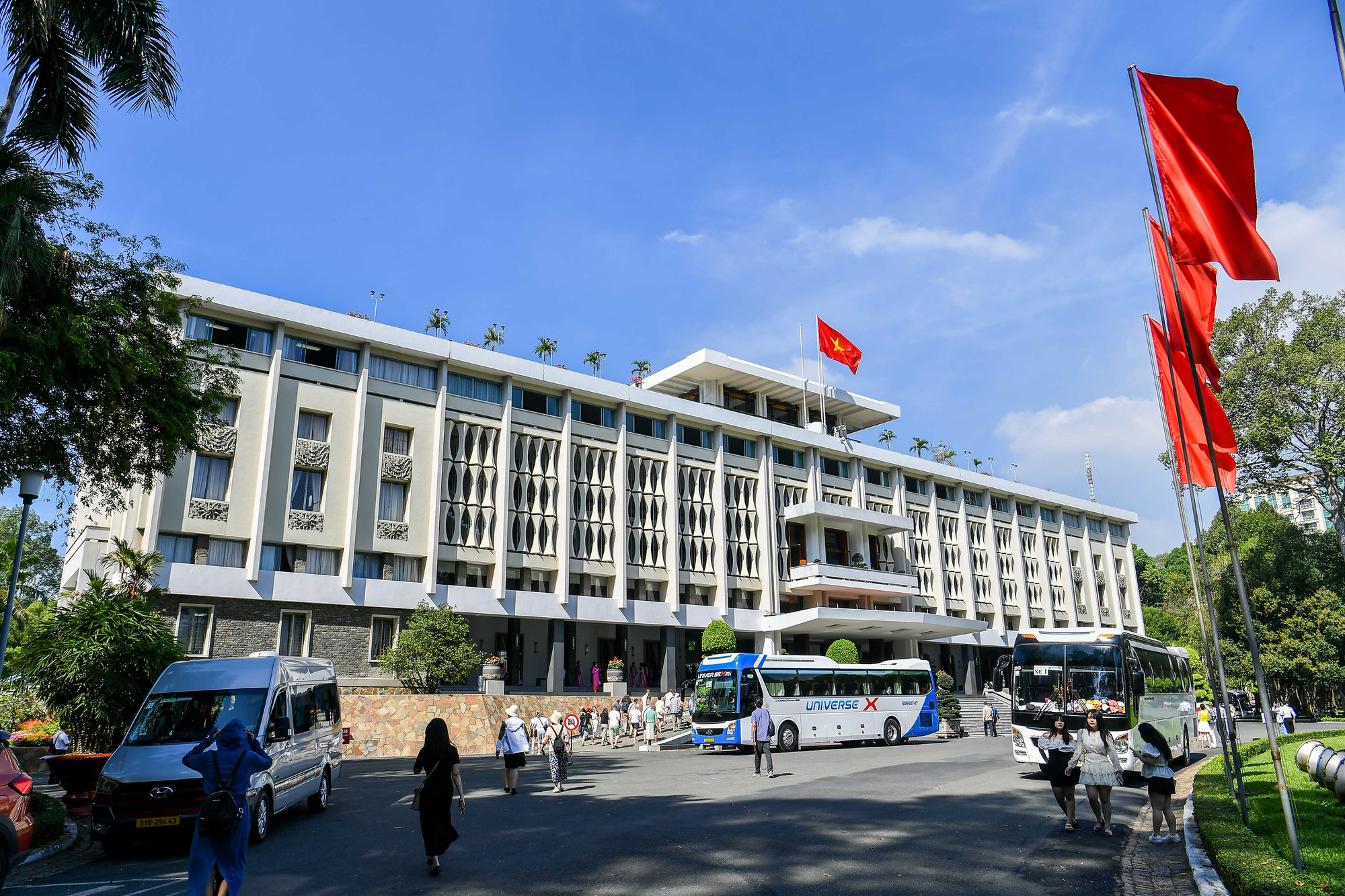 |
| The Independence Palace stands 26 meters high, with a construction area of 4,500 square meters and a total usable floor area of approximately 20,000 square meters. It consists of a basement, a ground floor, three main floors, two mezzanines, and a rooftop, featuring around 100 rooms, each decorated with a unique interior style. |
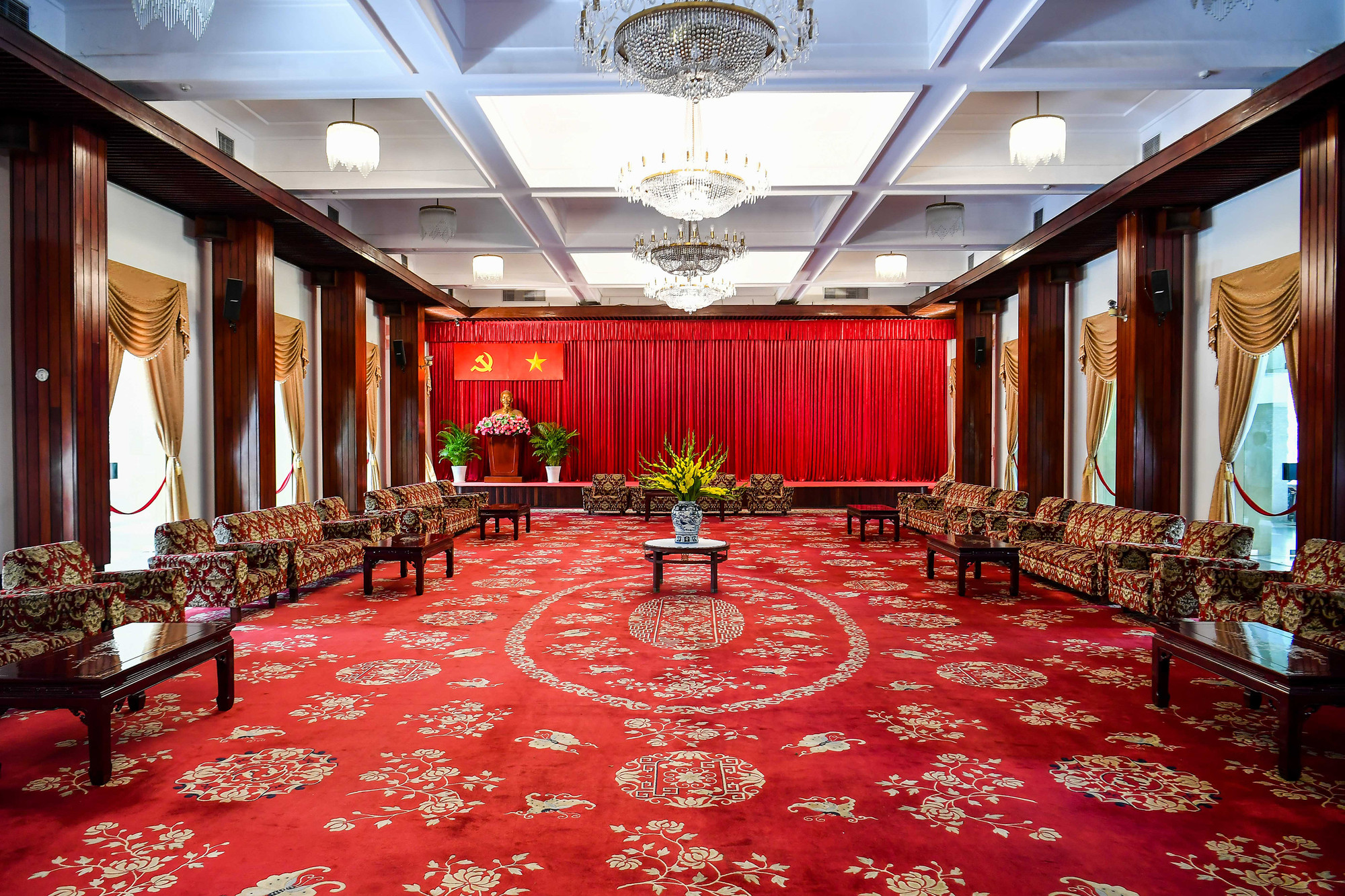 |
| The architecture of the Independence Palace is a striking blend of modern and traditional styles. Designed to serve as both the workplace and residence of the president, the palace features clearly defined functional zones: the working area for the president and the administration, the family’s living quarters, auxiliary facilities, and a robust underground bunker system. |
 |
| Inside the Banquet Hall of the Independence Palace |
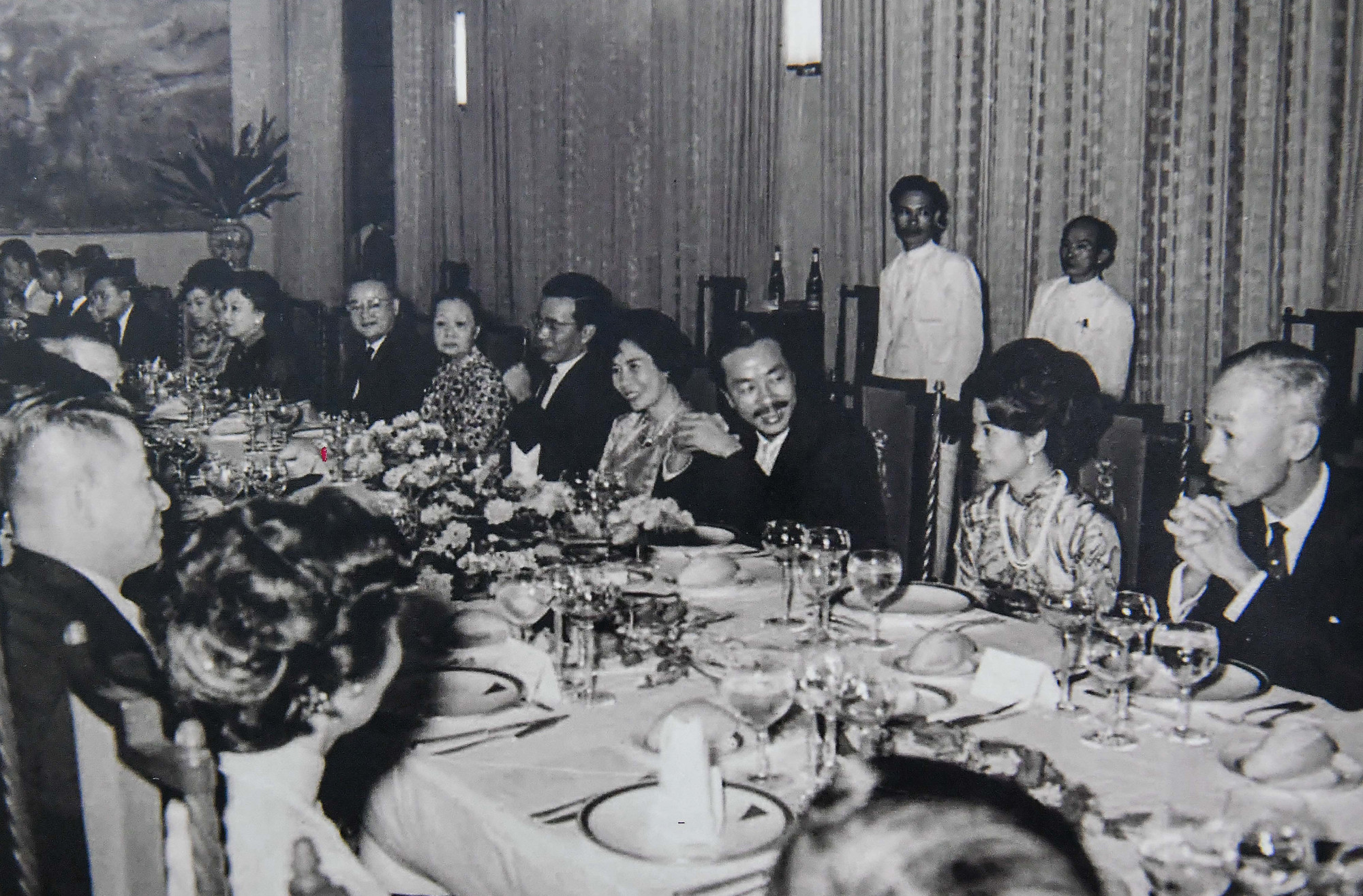 |
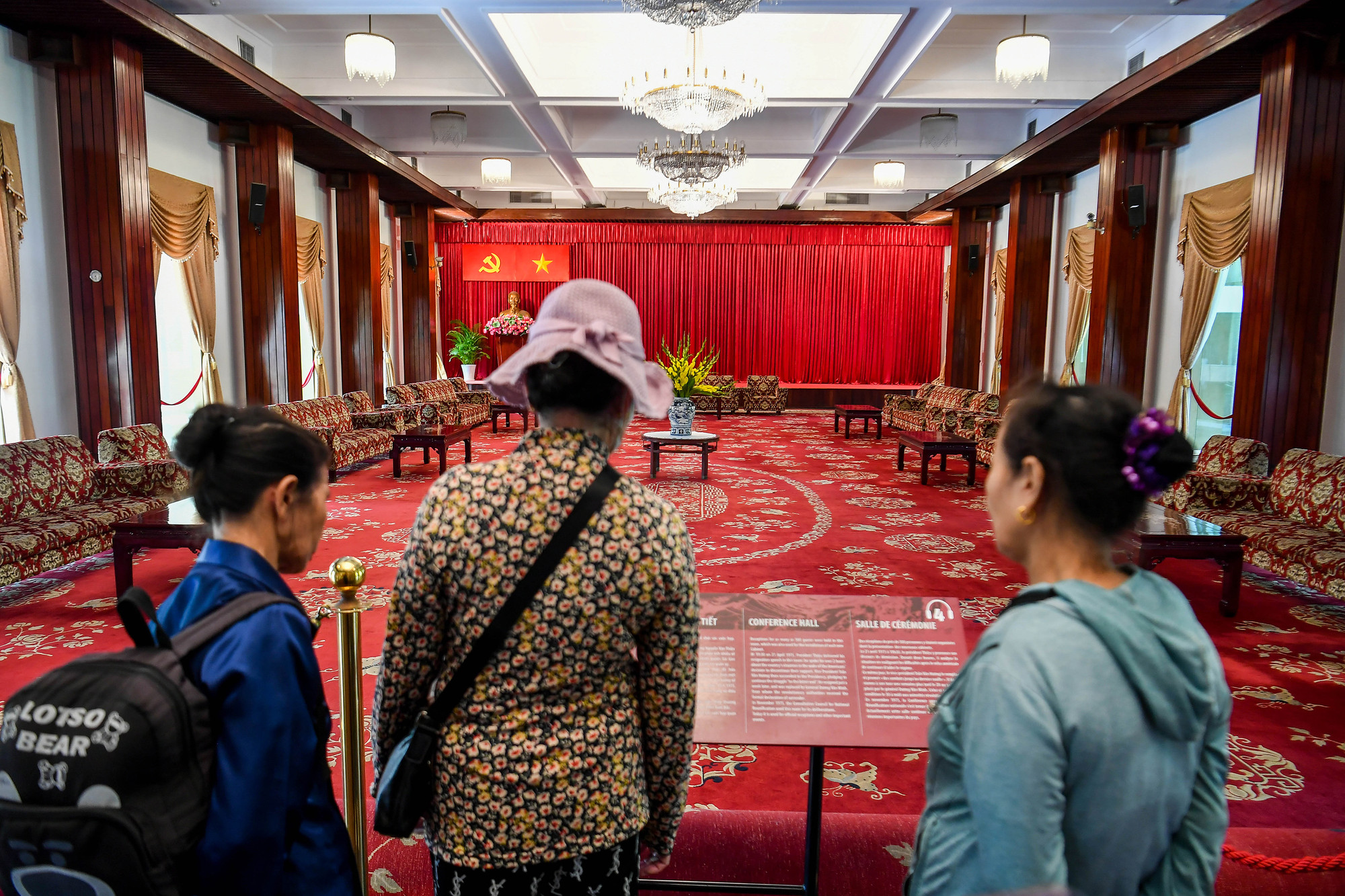
| The Ambassador Chamber, a venue for formal receptions with a capacity of over 100 guests. On October 31, 1967, it hosted the banquet for the inauguration ceremony of the President of the Republic of Vietnam, Nguyen Van Thieu, and Vice President Nguyen Cao Ky. |
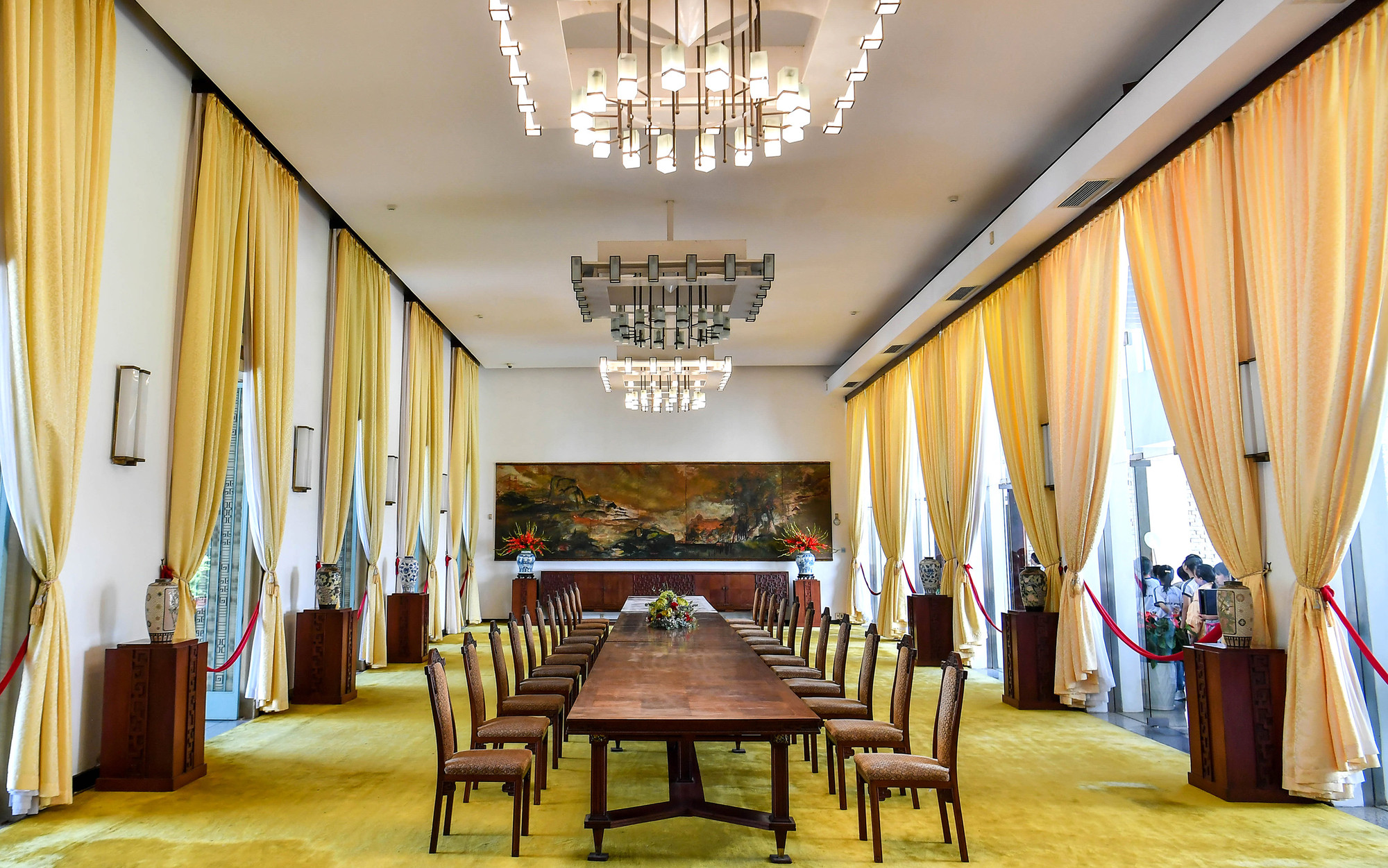 |
| The Ambassador Chamber today. |
 |
| The President’s Reception Room (where the President of the Republic of Vietnam, Nguyen Van Thieu, received guests). The President’s chair is positioned higher than the others, with a large wooden panel behind it symbolizing the national flag of the Republic of Vietnam. Opposite the President’s chair is the seat for high-ranking guests; both of these chairs feature dragon-head carvings. The remaining chairs, intended for secretaries and assistants, are adorned with phoenix-head carvings or the character for ‘Longevity’ (Thọ). |
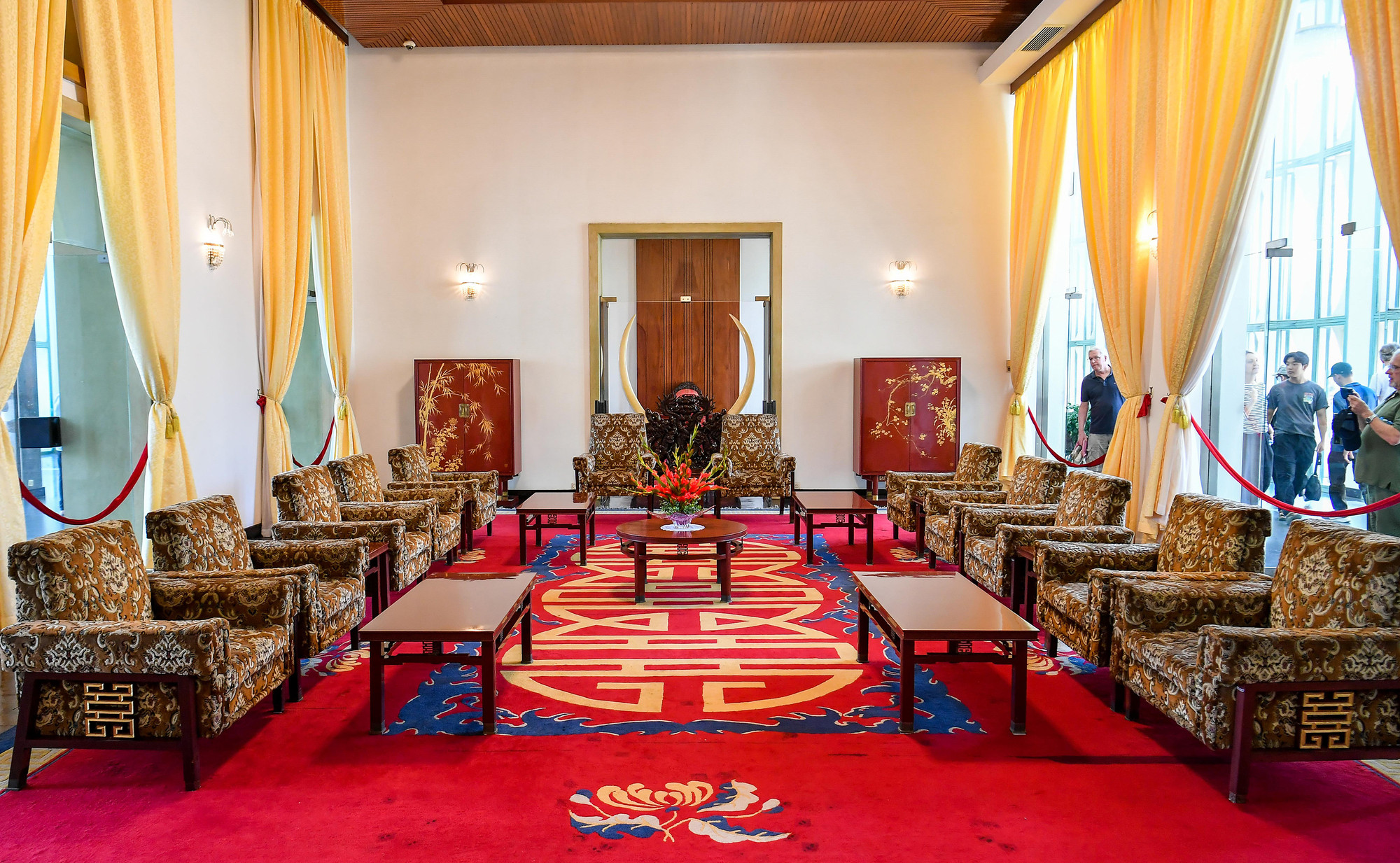 |
| The President’s Reception Room remains almost in its original state today |
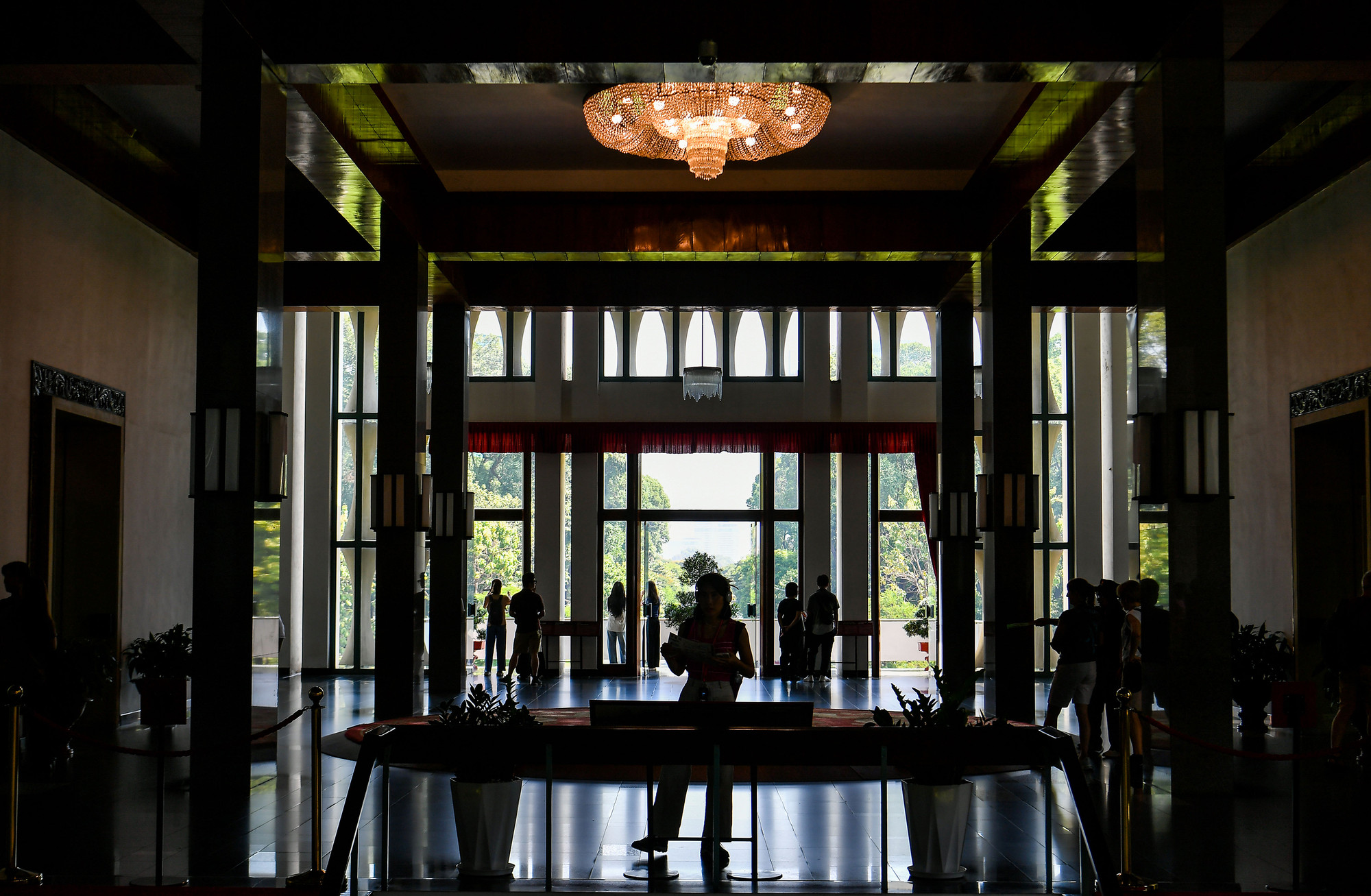 |
| Built in 1868, the Independence Palace was originally named Norodom Palace. In 1962, the Palace was reconstructed according to the design of architect Ngo Viet Thu, the first Vietnamese to win the prestigious Grand Prix de Rome. |
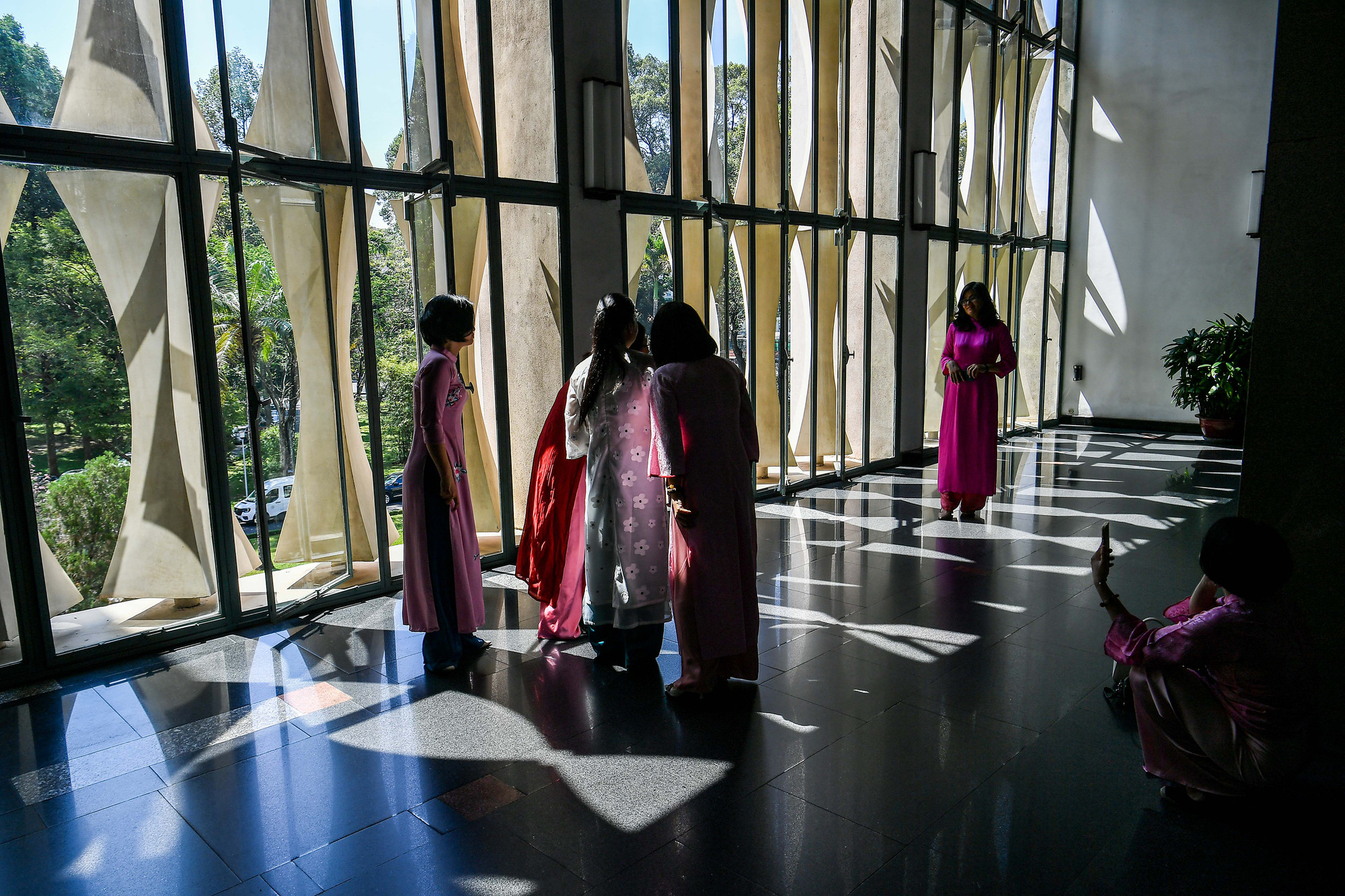 |
| Large glass windows positioned between the corridors allow natural light to fill the entire building. This is also a favorite “check-in” spot for many young people when visiting the Independence Palace. |
 |
| Visitors from far and wide are amazed to witness how the architecture and interior of the Independence Palace remain almost entirely in their original state. |
 |
| The Cabinet Room, where meetings of the Council of Ministers and the Cabinet of the Republic of Vietnam took place. |
 |
| The Cabinet Room today |
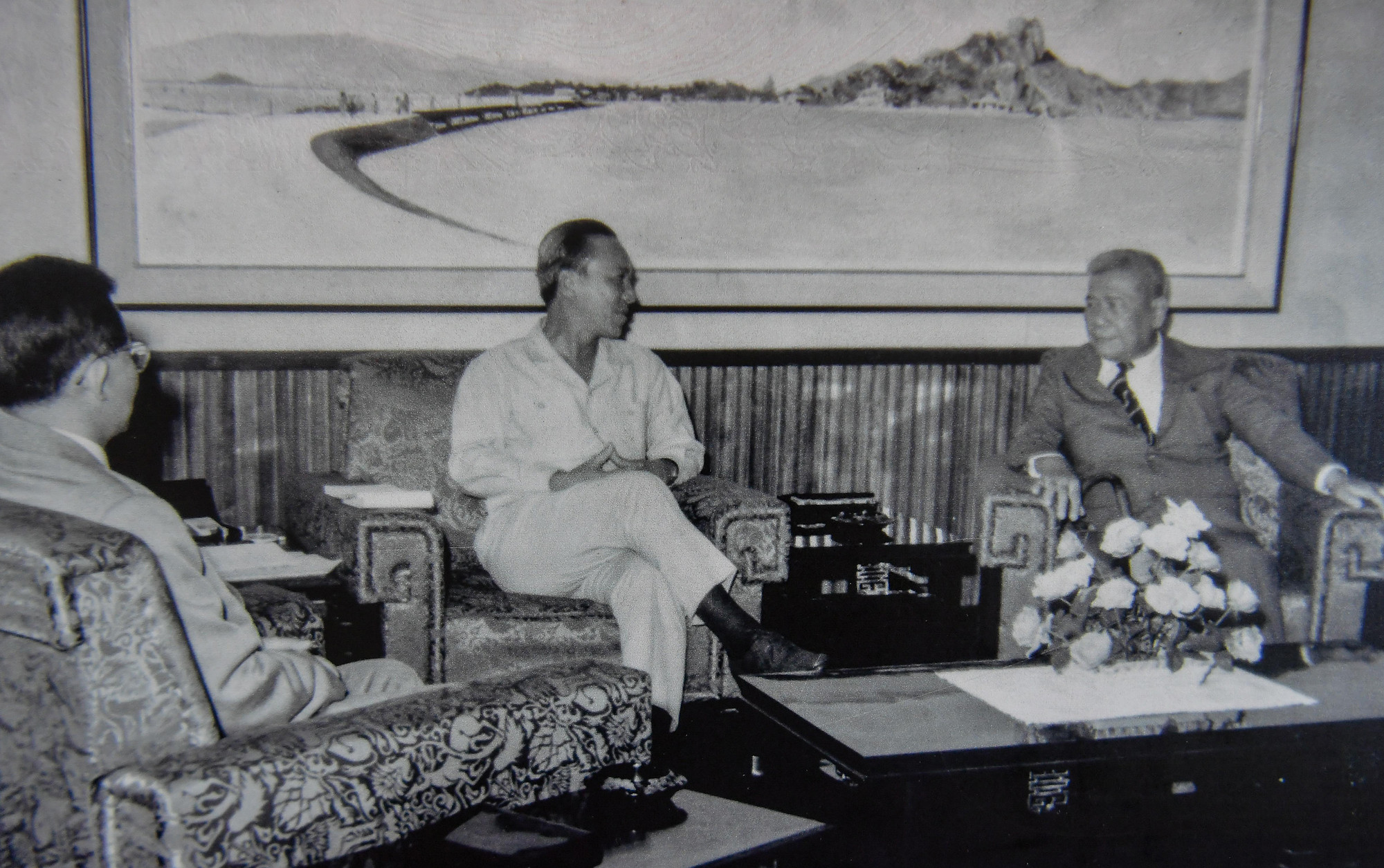 |
| The President’s Office. The President of the Republic of Vietnam, Nguyen Van Thieu (center), and Prime Minister Tran Van Huong (right) receiving the Minister of Culture, Education, and Youth – Le Minh Tri (left) on September 25, 1968. |
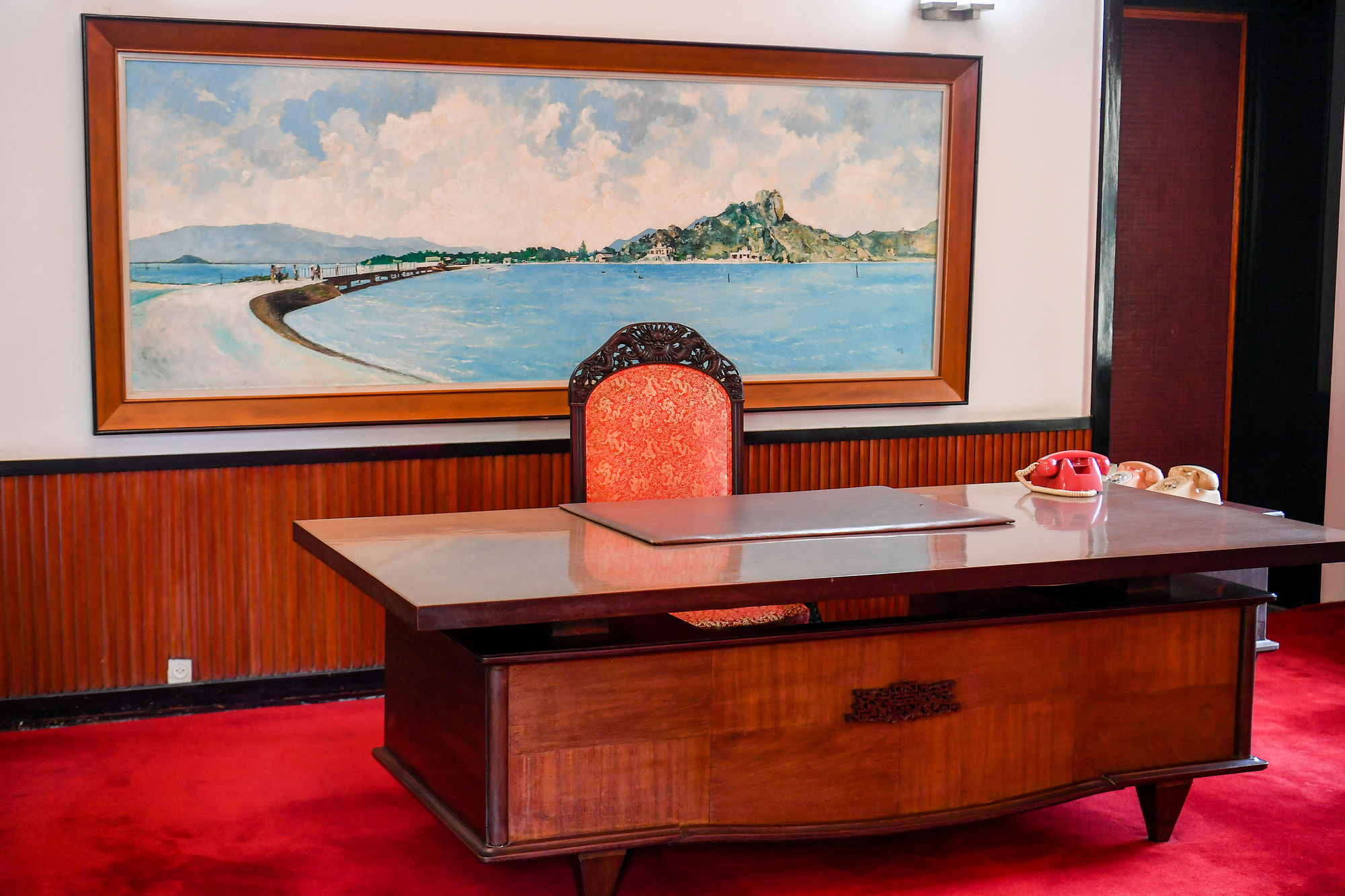 |
| The President’s Office today. |
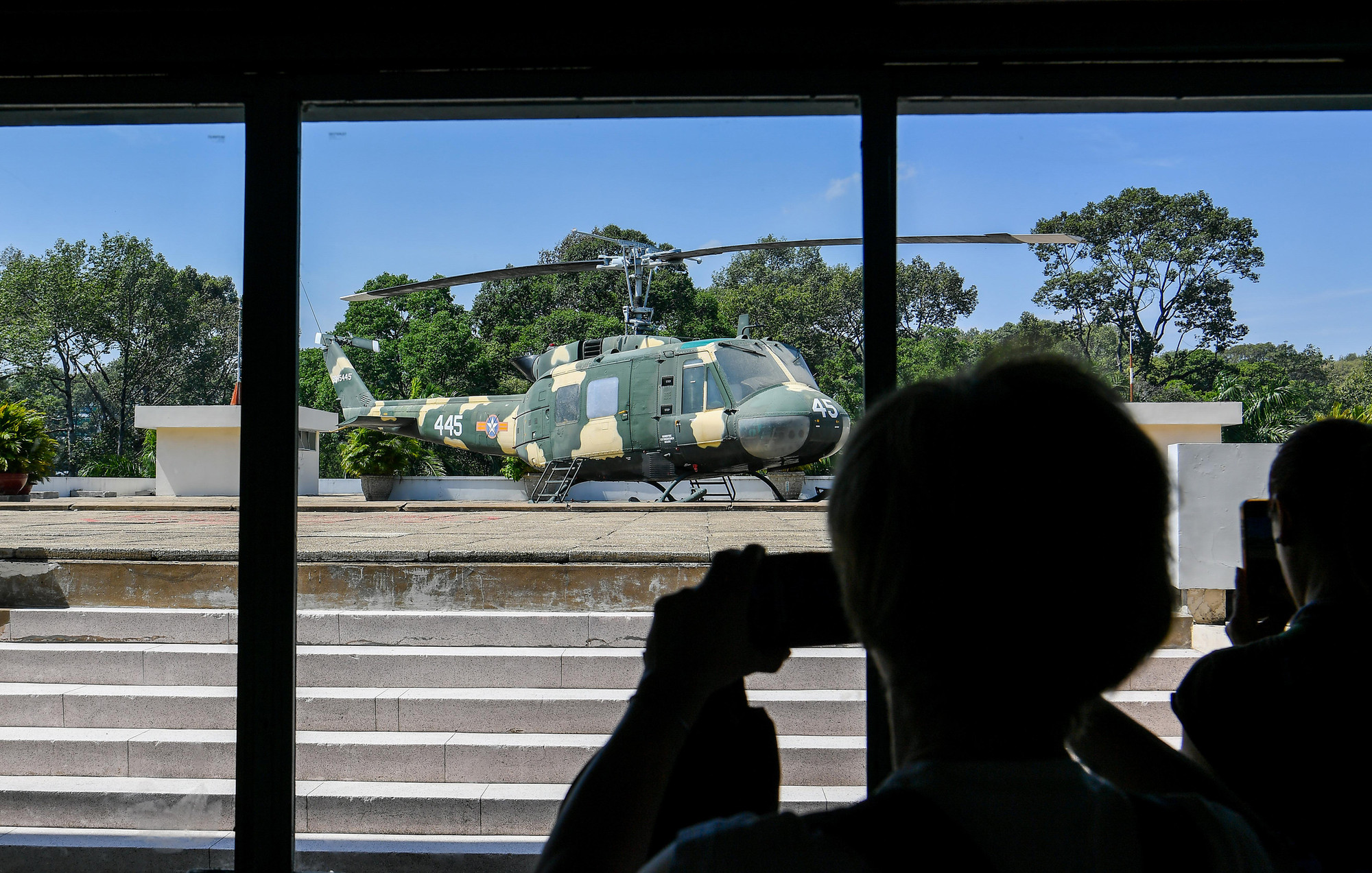 |
| After exploring the entire Independence Palace, visitors can head up to the rooftop to admire the UH-1 helicopter—an artifact tied to a pivotal event that contributed to the final victory in the closing days of the war. |
 |
| On April 8, 1975, pilot Nguyen Thanh Trung flew an F-5E aircraft from Bien Hoa and bombed the Independence Palace. The attack caused only minor damage; one bomb hit its target on the roof but only partially detonated, causing a localized collapse. The traces of the bombing have been preserved and marked by the monument management to help visitors better visualize the event. |
 |
| The basement is one of the areas that piques the most curiosity among visitors exploring the Independence Palace. |
 |
| The structure was designed by engineer Phan Van Dien and constructed with a reinforced layout, measuring 72.5m in length, between 0.8m and 22.5m in width, and 0.6m to 2.5m in depth. The rooms within the basement are interconnected by narrow concrete corridors, with 5mm thick steel-armored walls and a dedicated ventilation system. |
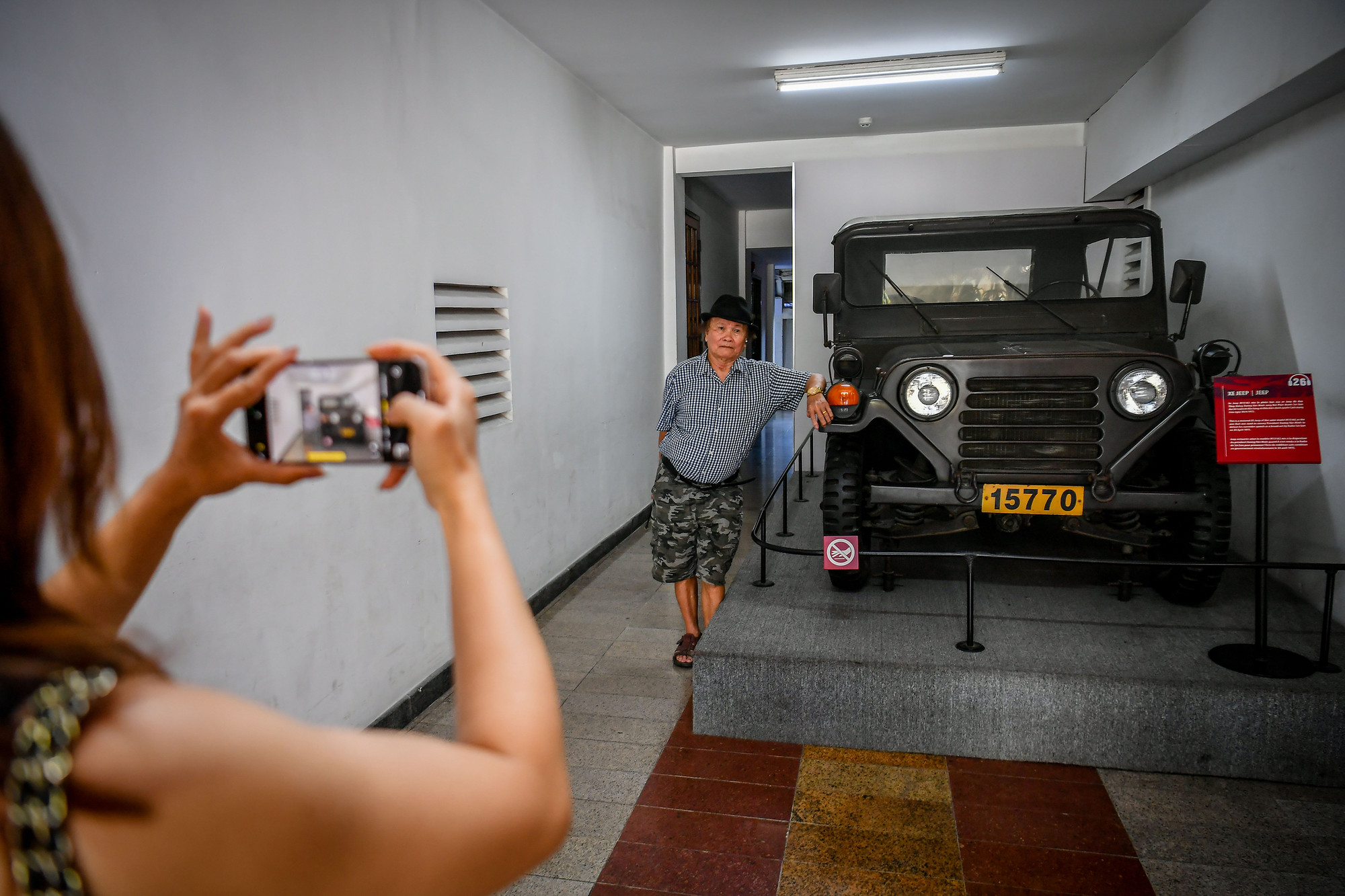 |
| Following the exit from the basement, visitors will encounter the Jeep M151A2—the vehicle that transported President Duong Van Minh to the Saigon Radio Station on the noon of April 30, 1975. It was there that he read the unconditional surrender declaration, officially dissolving the Saigon administration and ushering in the moment of national reunification. |
 |
| A Mercedes Benz, one of the official vehicles used by President Nguyen Van Thieu. |
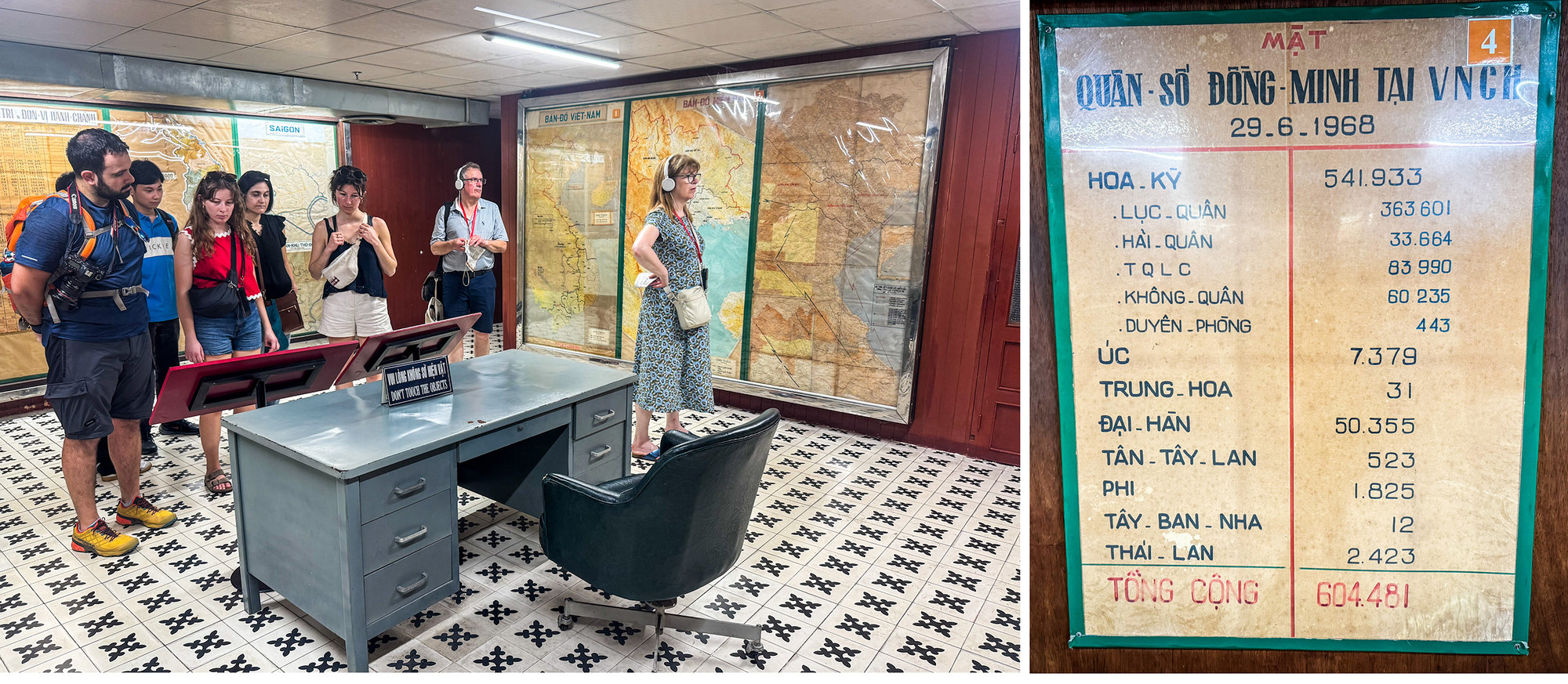 |
| The basement, which houses the secret documents of the Republic of Vietnam regime, is an area of great interest to visitors |
 |
| The Independence Palace in these historic days of April. |