|
(TBKTSG Online) – The photo exhibition ‘From Norodom Palace to Independence Palace 1868-1966’ is held in a French-architecture building, a remaining trace from the Norodom Palace era – which was considered a symbol of French power and presence in Cochinchina (or Southern Vietnam). In 1954, Norodom Palace was renamed Independence Palace and became the official workplace and residence of Ngo Dinh Diem, President of the Republic of Vietnam. In 1962, after the palace was severely damaged by bombing, Ngo Dinh Diem decided to level the old palace and build a new Independence Palace on the same site.
|
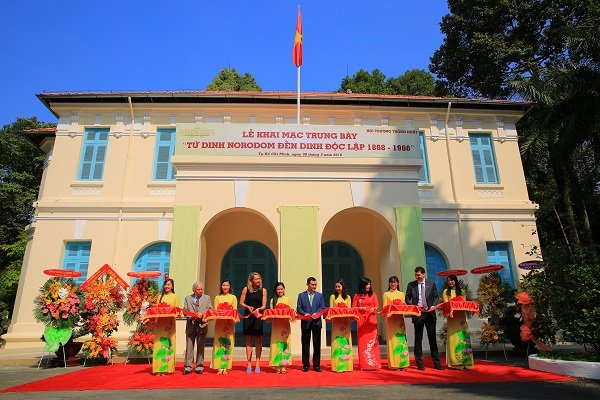
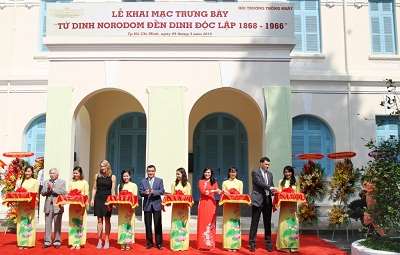
| The opening of the exhibition ‘From Norodom Palace to Independence Palace 1868 – 1966’ took place on March 9th, and it will officially be open to visitors free of charge from March 10th to March 23rd. |
|
| This exhibition is held in a two-story house built during the French colonial period, located within the complex of the Independence Palace historical site (No. 106 Nguyen Du Street, Ben Thanh Ward, District 1, Ho Chi Minh City). |
|
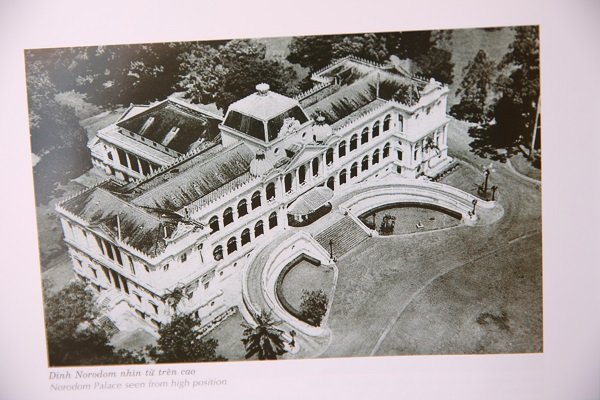
| This exhibition sheds light on the story of a palace that was once a symbol of the French colonial government in Cochinchina (or Southern Vietnam) and existed for nearly 100 years. On February 23, 1868, the Governor of Cochinchina, Pierre de La Grandière, conducted the groundbreaking ceremony, laying the first stone to commence the construction of the Governor’s Palace in the heart of Saigon. The historical stone laid by Pierre de La Grandière was a square block of rock, 50 cm wide on each side, sourced from Bien Hoa. Inside, there was a cavity holding the currency in use at the time—gold, silver, and copper coins bearing the image of King Napoleon III. The project was built on an area of 12 hectares, comprising a large villa with an 80-meter-wide facade, situated in an extensive complex with many trees and lawns. The palace featured a reception hall that could accommodate approximately 800 people. All building materials such as bricks, tiles, cement, and iron were transported from France. The accompanying image is an aerial photograph of Norodom Palace. |
|
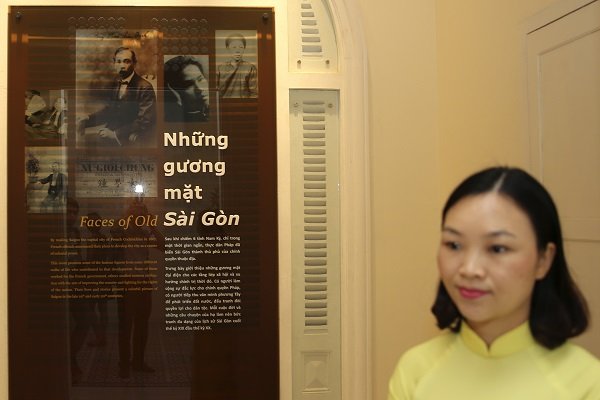
| The first floor introduces the establishment of Norodom Palace and depicts a part of life in Saigon during the French colonial period through four themes: the construction of Saigon’s urban area during the French colonial period, Norodom Palace, faces of Saigon, and dynamic Saigon. |
|
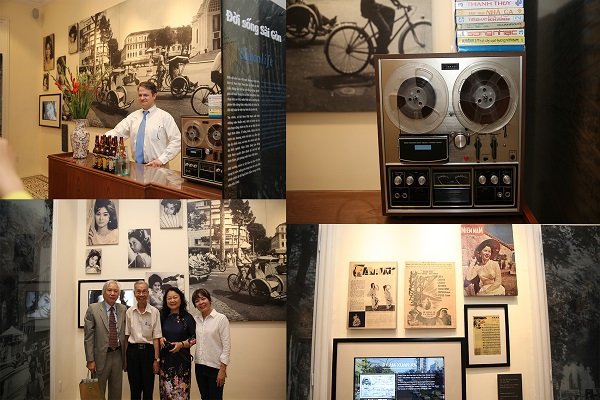
| The ‘Faces of Saigon’ Display Section. |
|
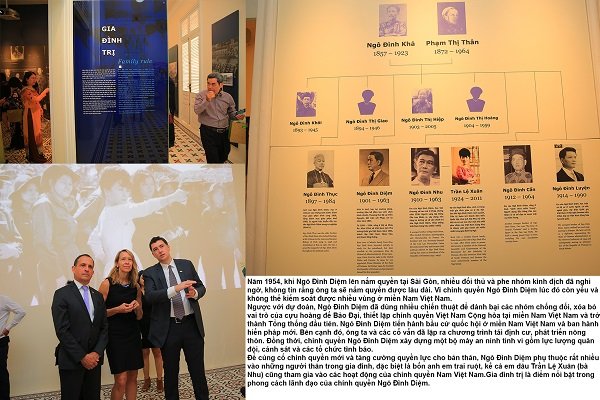
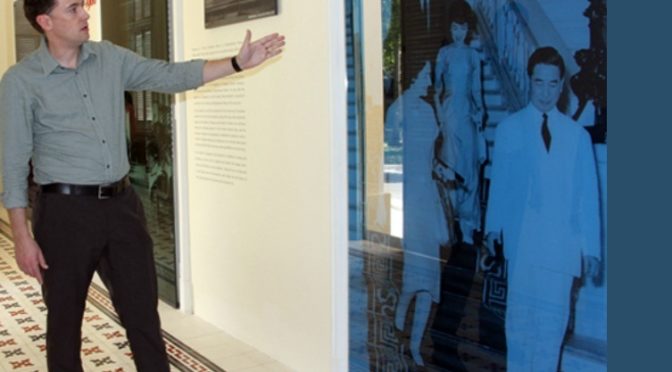
| After France’s defeat at Dien Bien Phu, Head of State Bao Dai appointed Ngo Dinh Diem as the Prime Minister of the State of Vietnam. On September 7, 1954, General Paul Ély, the French Commissioner-General for Indochina, handed over Norodom Palace to Ngo Dinh Diem, and the following day Norodom Palace was renamed Independence Palace. |
|
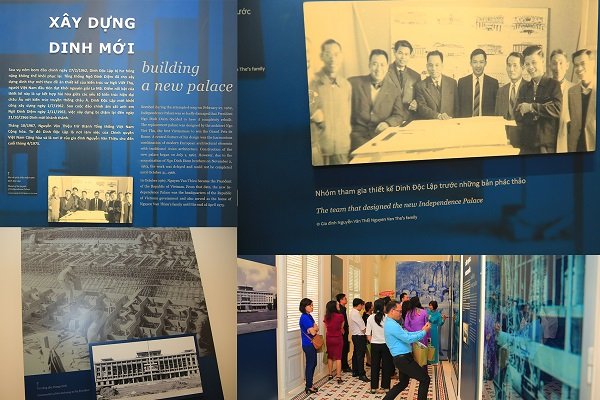
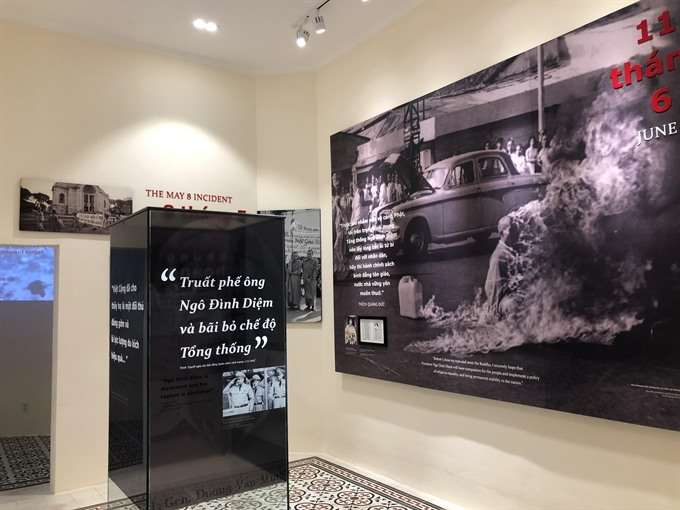
| Visitors are viewing interpretive information about the historical periods during the Ngo Dinh Diem administration. |
|
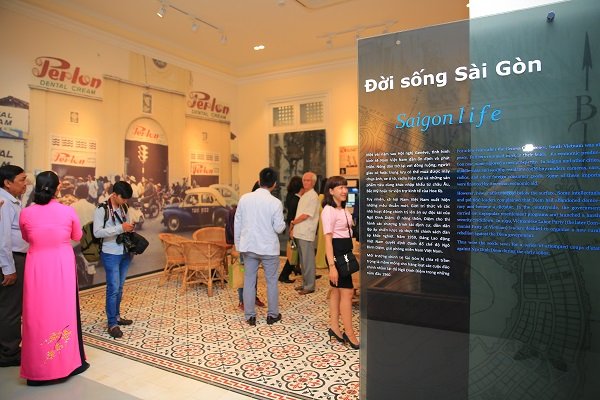
| The exhibition area displaying life in Saigon at that time. |
|
| This exhibition offers a new approach and interpretive method regarding history, utilizing source materials from the national archives of Vietnam, the United States, and France. |
|